Choosing orthopedic surgical plates is not simply a matter of comparing prices or catalog images. Global buyers must evaluate fixation strength, anatomical fit, material quality, and clinical reliability. A plate that appears suitable on a screen may feel too rigid, too thin, or poorly matched to a surgeon’s instruments.
No plate fits every fracture.
Experienced procurement teams examine stainless steel or titanium specifications, fatigue-test data, sterilization options, and traceability records. They also review packaging details. A damaged corner, unclear labeling, or missing batch information can create serious concerns during hospital use. Supplier communication matters too, especially when technical questions cross languages and time zones.
As orthopedic surgeon Robert W. Bucholz, MD, stated, “The goal of fracture treatment is to restore the patient to the level of function he had before the injury.” This principle explains why orthopedic surgical plates should be judged beyond their appearance. Their value depends on dependable design, controlled manufacturing, and practical surgical performance.
The difficult part is comparison.
Global buyers may face different hospital protocols, surgical preferences, and regulatory expectations. Therefore, a trusted supplier should provide clear technical files, quality certifications, product specifications, and responsive support. Yet documentation alone is not enough. Buyers should ask how the plates perform under real clinical demands and whether the instrument system is genuinely compatible.
Cost remains important, but the cheapest option may not deliver the lowest total expense. Poor fit, delayed supply, or inconsistent quality can affect surgical efficiency and patient recovery. A careful purchasing decision requires evidence, not promises. It also requires humility, because even a well-designed plate can fail when selection or technique is inappropriate.
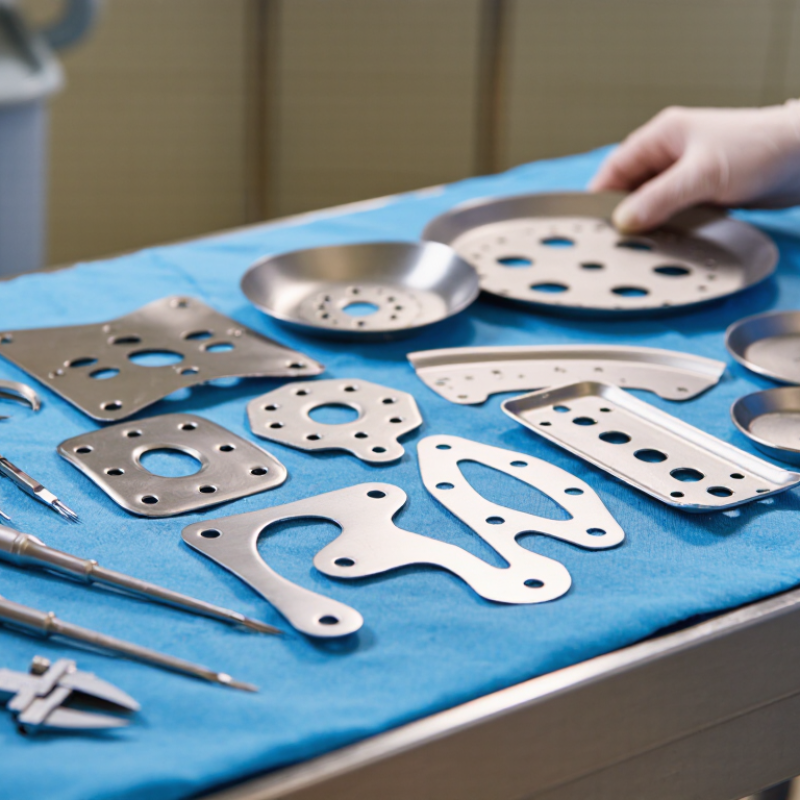
Why Choose Orthopedic Surgical Plates for Global Buyers?
Orthopedic surgical plates are shaped metal devices placed along a fractured bone. Screws attach the plate to selected bone segments. The construct stabilizes movement while new bone develops. Some plates compress the fracture gap. Others bridge damaged areas and preserve the local blood supply.
Their function is mechanical, not biological. A plate cannot replace healthy bone or correct poor surgical planning. It can support alignment, reduce unwanted motion, and help patients begin controlled rehabilitation. The World Health Organization reported that about 1.71 billion people live with musculoskeletal conditions worldwide in 2022. The Global Burden of Disease Study 2019 also recorded a substantial global fracture burden, published in The Lancet in 2021. These figures explain demand, but they do not justify one design for every patient. That assumption needs challenging.
Experienced teams match plate geometry, thickness, hole pattern, and screw type to the fracture site. Stainless steel and titanium alloys offer different handling and imaging characteristics. Product selection should include fatigue testing, biocompatibility evidence, sterilization instructions, traceability, and regulatory documentation. Local anatomy matters. So does surgeon training.
Tips: Global buyers should request complete technical files, test methods, packaging details, and clear instructions for use. Check whether the available sizes fit common patient anatomies. Ask how manufacturing quality is monitored. A low purchase price may hide training, inventory, or revision costs. Even careful procurement cannot remove every clinical risk.
Orthopedic surgical plates are mainly manufactured from titanium alloys, stainless steel, or cobalt-chromium alloys. Titanium alloy Ti-6Al-4V offers high strength, corrosion resistance, and lower weight. Its elastic modulus is closer to bone than stainless steel, although it remains much stiffer than living bone. Stainless steel, commonly 316L, provides reliable strength and lower material cost. Cobalt-chromium is harder, but it is less common for routine fracture plates. Material selection affects imaging, handling, fatigue life, and the risk of stress shielding.
Plate design is equally important. Locking plates use threaded holes to connect screws firmly with the plate, supporting weaker bone and reducing the need for perfect plate-to-bone contact. Dynamic compression plates create controlled compression across a fracture. Reconstruction plates can be contoured, while anatomical plates reduce bending during surgery. Variable-angle holes allow surgeons to adjust screw direction around joints. Small details matter. A sharp edge can irritate soft tissue.
The World Health Organization reports approximately 20–50 million non-fatal road traffic injuries each year, many involving orthopedic trauma. This demand helps explain the growing fixation market. Grand View Research valued the global orthopedic implants market at about USD 49.5 billion in 2023 and projected continued growth through 2030. These figures describe market activity, not clinical superiority. No design fits every fracture. In practice, plate thickness, screw pattern, bone quality, and surgical experience must be assessed together. The “best” material may still be the wrong choice when anatomy is misunderstood.
| Dimension | Material or Design | Key Characteristics | Typical Orthopedic Applications | Global Buyer Considerations |
|---|---|---|---|---|
| Material | Titanium and titanium alloys CP TitaniumTi-6Al-4V |
High strength-to-weight ratio, good corrosion resistance, and a modulus of elasticity lower than stainless steel. Titanium alloys are widely used for internal fixation devices. | Trauma fixation, periarticular plates, clavicle plates, foot and ankle plates, and maxillofacial fixation. | Useful where lower implant weight and favorable biocompatibility are priorities. Buyers should verify alloy grade, mechanical testing, surface finish, and applicable regulatory documentation. |
| Material | 316L stainless steel | Established implant material with high strength, good corrosion resistance, and a long history of clinical use. It is generally stiffer than titanium. | General fracture fixation, compression plates, reconstruction plates, and systems requiring a rigid construct. | Often selected for cost efficiency and established manufacturing processes. Confirm material certification, passivation, corrosion testing, and compatibility with the intended screw system. |
| Material | Cobalt-chromium alloys | High strength, hardness, wear resistance, and stiffness. These alloys are less common for routine bone plates than titanium and stainless steel. | Specialized fixation applications where high strength or wear resistance is required. | Because the material is relatively stiff and less commonly used in standard plate portfolios, buyers should review clinical indications, forming limitations, machining quality, and relevant biocompatibility data. |
| Fixation principle | Compression plate | Uses eccentric or dynamic compression holes to generate axial compression across a fracture when applied correctly. | Simple transverse or short-oblique fractures where controlled interfragmentary compression is clinically appropriate. | Check hole geometry, screw compatibility, plate contouring limits, and whether the system supports the desired compression technique. |
| Fixation principle | Locking compression plate | Combines conventional compression holes with threaded locking holes. Locking screws create a fixed-angle construct between the screw head and plate. | Osteoporotic bone, metaphyseal fractures, comminuted fractures, and situations where preservation of periosteal blood supply is important. | Confirm locking thread design, screw head compatibility, angular stability testing, and availability of instruments for accurate screw placement. |
| Plate profile | Low-profile plate | Reduced plate prominence can help limit soft-tissue irritation, while maintaining the required mechanical performance for the indication. | Distal radius, clavicle, hand, foot, ankle, and other anatomically superficial locations. | Compare plate thickness, edge design, screw trajectory, radiographic visibility, and anatomical fit. Lower profile does not automatically mean suitable for every load condition. |
| Anatomical design | Pre-contoured anatomical plate | Designed to follow the typical shape of a specific bone region and reduce intraoperative bending requirements. | Distal femur, proximal tibia, proximal humerus, distal radius, pelvis, clavicle, and periarticular fractures. | Useful for standardized product selection across hospitals. Buyers should evaluate anatomical coverage across patient sizes and confirm that the plate can still be adjusted when necessary. |
| Anatomical design | Reconstruction plate | Features relief or segmentation that allows controlled bending in more than one plane, depending on the system design. | Pelvic, acetabular, mandibular, clavicular, and irregular bone regions. | Prioritize bending-cycle performance, resistance to fatigue after contouring, instrument compatibility, and clear instructions for use. |
| Fracture support | Buttress plate | Supports a fracture fragment and helps resist shear or collapse, particularly near a joint surface. | Tibial plateau, distal radius, distal femur, and other metaphyseal fractures. | Review the support geometry, screw direction, plate-to-bone fit, and whether the design is intended for left, right, or universal use. |
| Shaft fixation | Limited-contact or minimally invasive plate design | Uses reduced bone-contact areas or an elevated undersurface to limit direct contact between the plate and cortical bone. | Long-bone shaft fractures treated with bridge plating techniques. | Can support biological fixation concepts, but outcomes depend on fracture pattern, construct length, screw distribution, and surgical technique. |
| Screw interface | Fixed-angle locking interface | Maintains a predetermined screw-plate angle and can improve construct stability in poor-quality or short bone segments. | Periarticular fractures, osteoporotic bone, and bridge-plating constructs. | Ensure the plate and screws are validated as one system. Mixing components from different systems may compromise fit, locking function, or regulatory compliance. |
| Manufacturing | CNC-machined or precision-forged plate | Manufacturing route influences dimensional accuracy, surface condition, grain structure, and fatigue performance. | Most trauma plate categories, including standard, anatomical, and locking plates. | Request dimensional inspection records, surface roughness limits, cleaning validation, fatigue data, and traceability for raw materials and finished devices. |
| Surface and finish | Passivated or electropolished surface | Surface treatments can reduce contamination risk and improve corrosion resistance when properly controlled and validated. | Stainless-steel and selected titanium implant systems. | Verify process validation, cleanliness limits, corrosion testing, particulate control, and packaging integrity rather than relying only on appearance. |
| Supply and compliance | Sterile or non-sterile configuration | Orthopedic plates may be supplied sterile or non-sterile, depending on the product design, market, and intended reprocessing pathway. | Hospital trauma systems, distributor portfolios, and instrument-compatible implant sets. | For global purchasing, confirm sterilization method, sterility assurance information, shelf life, packaging validation, labeling language, and country-specific registration requirements. |
| Technical standards | Material and quality documentation | Commonly referenced material specifications include ISO 5832 series requirements for metallic surgical implant materials. Exact standards depend on material, device type, and market. | All metallic orthopedic plate systems. | Request certificates of conformity, material test reports, risk-management records, biocompatibility evaluation, mechanical test results, and a quality-management certificate such as ISO 13485 where applicable. |
Buyer note: Material selection, plate geometry, screw configuration, and clinical performance must be evaluated together. Regulatory requirements, accepted standards, labeling rules, and registration pathways vary by destination market; buyers should verify the current requirements with the relevant authority and qualified clinical or regulatory professionals.
Orthopedic plates provide controlled stability when broken bones need accurate alignment. The 2021 Lancet analysis of the Global Burden of Disease Study estimated 178 million new fractures worldwide in 2019. For many complex fractures, plates can restore bone length, rotation, and joint surface position. This matters when a few millimeters may affect walking, grip, or shoulder movement. Locking mechanisms can support weaker bone, especially in older adults with reduced bone density.
Clinical benefits also depend on surgical judgment. Stable fixation may allow earlier, supervised movement and reduce prolonged immobilization. That can help protect muscle strength and joint flexibility. However, plates are not magic. Infection, screw loosening, tendon irritation, delayed healing, and later removal remain possible. Evidence from systematic reviews and national orthopedic registries shows that outcomes vary with fracture type, soft-tissue damage, patient health, and surgical experience. A well-designed plate cannot compensate for poor reduction or inadequate rehabilitation.
For global buyers, reliable clinical value requires more than mechanical strength. Products should have traceable materials, validated fatigue testing, clear instrumentation, and documented quality systems. The ISO 10993 biological evaluation framework and ISO 13485 quality-management requirements offer useful reference points. These standards do not guarantee success. They support safer decisions when combined with clinical evidence, surgeon training, and local regulatory review. A careful buyer should ask for complication data, not only attractive laboratory results.
Why Choose Orthopedic Surgical Plates for Global Buyers?
How Should Global Buyers Evaluate Plate Quality and Safety?
Global buyers should examine more than price, appearance, and delivery speed. A reliable evaluation begins with the plate’s material certificate, manufacturing records, and lot traceability. Common implant materials require verified chemical composition and documented mechanical performance. Ask for independent test reports covering fatigue strength, bending resistance, corrosion behavior, and dimensional accuracy.
Small details matter.
Inspect the plate edges, screw holes, surface finish, and packaging seals. Sharp edges may complicate handling, while inconsistent holes can affect screw placement. A smooth surface looks reassuring, but appearance alone proves little. Buyers should review cleaning validation, sterilization records, and shelf-life data when products are supplied sterile. Biocompatibility evidence should match the actual material, coating, and intended contact with the body.
Regulatory documents also need careful checking. Confirm the manufacturer’s quality system, product registration, risk analysis, and post-market complaint process. Requirements differ across countries, so one certificate may not satisfy every market. Request samples and compare them with approved drawings. In practice, buyers sometimes focus heavily on paperwork and overlook instrument compatibility or surgeon feedback. That is an avoidable weakness. A practical trial should assess fit, handling, screw engagement, and packaging integrity. Records should remain clear from factory shipment to hospital receiving.
The chart shows the number of example international standards and guidance references associated with each buyer checkpoint. Mechanical performance, material selection, biological safety, sterilization and packaging, and quality-risk management should be assessed together before purchasing orthopedic surgical plates.
References include ASTM F382, ISO 9585, ISO 5832, ISO 10993, ISO 11135, ISO 11137, ISO 11607, ISO 13485 and ISO 14971. Applicability depends on the plate material, intended use, sterilization method and destination-market requirements.
Global buyers often compare orthopedic surgical plates by price first. That approach can create expensive surprises later. Material grade, plate geometry, screw compatibility, and production consistency deserve closer attention. Experienced sourcing teams request dimensional reports, mechanical test results, and sample plates before approving volume orders. A small mismatch around a screw hole can affect surgical handling. It can also increase inspection waste.
Compliance requirements vary across destination markets. Buyers should confirm classification, registration duties, labeling rules, and language requirements early. A supplier should provide controlled technical documents, batch traceability, and evidence of quality-system management. Sterilization status must remain clear. Some plates are supplied non-sterile, while others follow a validated sterilization process. Never assume the same file works everywhere. That assumption is risky. I have seen purchasing plans underestimate documentation work, especially when local representatives or post-market records are required.
Tips: Calculate landed cost, not unit price. Include tooling, samples, testing, freight, duties, inspection, and possible rejects. Ask for a written change-control process. Review production samples under realistic lighting, not only photographs. Keep a compliance checklist for every destination. It may feel repetitive, but missing one label detail can delay an entire shipment. Also, challenge unusually low quotations. They may exclude essential tests, packaging controls, or technical support. A slower evaluation often protects the budget better than a quick purchase.