What Are the Top 10 Orthopedic Supplies for Global Buyers?

Orthopedic supplies support care for fractures, joint disorders, sports injuries, and long-term mobility needs. The World Health Organization reports that approximately 1.71 billion people live with musculoskeletal conditions worldwide. This figure explains why global buyers examine more than product price. They also assess fit, durability, clinical evidence, traceability, and after-sales support.

This guide explores ten practical categories, including braces, casts, crutches, walkers, wheelchairs, orthopedic footwear, surgical instruments, implants, compression products, and rehabilitation equipment. WHO’s World Report on Vision and rehabilitation guidance emphasizes accessible, continuous care across different health systems. That principle matters in procurement. A knee brace for a city clinic may require different materials from one used in a humid rural region. Small details matter.

Market estimates also show strong growth, although reported values differ by research firm. Grand View Research, Fortune Business Insights, and MarketsandMarkets publish varying forecasts for the global orthopedic devices sector. These differences reflect changing definitions, exchange rates, and product categories. That uncertainty deserves attention. A large market number does not guarantee reliable supply.

For international purchasers, quality management is central. ISO 13485 certification, applicable regulatory approvals, biocompatibility evidence, clear labeling, and batch records can reduce avoidable risk. Yet certification alone is not enough. Buyers should review complaint handling, sterilization controls, lead times, and replacement policies. The following overview focuses on orthopedic supplies that combine clinical usefulness, purchasing practicality, and dependable global distribution. Some choices may still require local professional review.
What Are the Top 10 Orthopedic Supplies for Global Buyers?

Defining Orthopedic Supplies: WHO Reports 1.71 Billion Musculoskeletal Cases

Orthopedic supplies support movement, joint stability, fracture care, and physical rehabilitation. The World Health Organization reports that 1.71 billion people live with musculoskeletal conditions worldwide. This figure includes back pain, fractures, osteoarthritis, and other disorders. The need is vast. However, “orthopedic supply” has no single universal definition. It usually covers products used for prevention, treatment, recovery, and daily mobility.

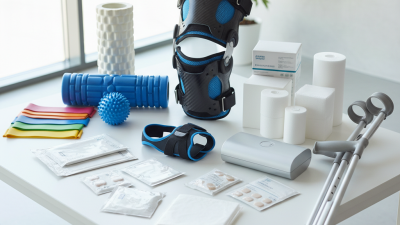
For global buyers, the top ten categories include orthopedic braces, compression supports, splints, casting materials, orthopedic shoes, crutches, walkers, wheelchairs, traction devices, and rehabilitation bands. Each serves a different clinical purpose. A wrist splint must hold the joint securely without causing pressure marks. A walker needs stable feet and comfortable hand grips. Small design details matter.

The WHO and UNICEF Global Report on Assistive Technology estimates that more than 2.5 billion people need at least one assistive product. That need may exceed 3.5 billion by 2050. These figures underline the importance of reliable supply chains and practical product testing. Buyers should review material safety, load capacity, sizing systems, cleaning instructions, and relevant regulatory documents. The Global Burden of Disease Study also shows that low back pain remains a leading cause of disability worldwide. Yet, a low-cost product is not automatically a suitable product. Local clinicians should validate fit, durability, and user comfort before large-scale purchasing. Some procurement decisions still rely too heavily on catalog images. That deserves closer review.

Top 10 Supplies, Part I: Implants, Braces, Splints, and Casting Products

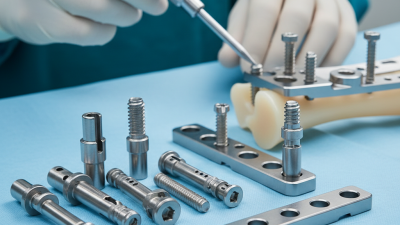
Global buyers often begin with orthopedic implants, but price should never lead the assessment. Fixation plates, screws, and joint components require accurate dimensions, consistent materials, and clear traceability. Buyers should request test reports, sterilization records, and batch documentation before approving samples. Packaging deserves close inspection too. A torn seal or unclear label can create serious clinical uncertainty. In my experience, measuring trial pieces and checking screw alignment reveals problems that brochures often hide. Not every sample represents full production quality. That point deserves attention.

Braces and splints must balance support, comfort, and practical fitting. A knee brace should hold its position during movement without creating painful pressure points. Wrist splints need smooth edges, breathable padding, and dependable closures. Size charts should reflect real body measurements, not vague labels. Casting products also need careful review. Plaster and synthetic rolls should show predictable activation, curing time, and handling strength. Stockinette and padding should protect skin without becoming bulky under the cast. Storage conditions matter, especially in humid shipping environments. Ask about carton protection, expiry information, and batch consistency. Field feedback can expose issues that laboratory checks miss. A brace may perform well in a clinic but fail during daily wear. Buyers should record these gaps and revise specifications before larger orders. Reliable sourcing depends on evidence, careful sampling, and honest attention to limitations.

Top 10 Supplies, Part II: Mobility Aids, Surgical Tools, and Prostheses

What Are the Top 10 Orthopedic Supplies for Global Buyers?

Top 10 Supplies, Part II: Mobility Aids, Surgical Tools, and Prostheses

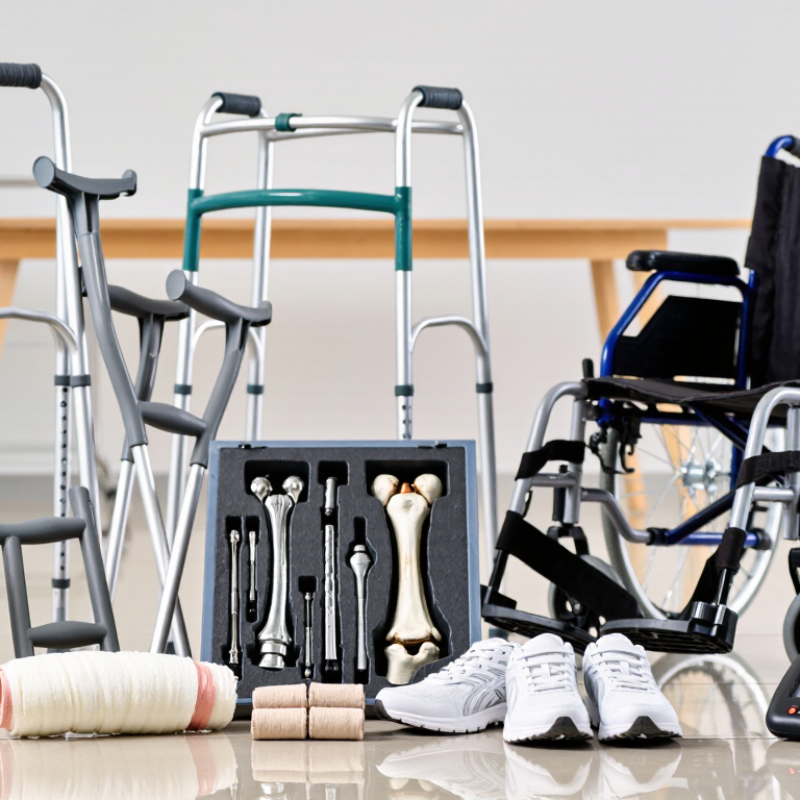
Mobility aids often form the practical foundation of orthopedic care. Walkers, crutches, wheelchairs, and transfer supports should match the user’s strength, height, and daily environment. A stable walker needs firm grips, reliable brakes, and non-slip tips. Small details matter. Buyers should request load testing, adjustment ranges, spare parts, and clear cleaning instructions. A wheelchair may look suitable online, yet its seat width can cause pressure or poor posture.

Surgical tools require stricter purchasing discipline. Bone saws, retractors, drills, and fixation instruments need consistent materials, balanced handling, and precise finishing. Instruments should arrive with traceable documentation, inspection records, and validated cleaning guidance. Procurement teams should also confirm compatibility with existing equipment. One overlooked connection can delay an entire procedure. Lower prices deserve careful questions, not automatic rejection.

Prostheses demand even more attention because comfort, fit, and long-term function depend on individual assessment. Joint implants, limb prostheses, sockets, and liners should be selected with qualified clinical input. Buyers need material specifications, sizing charts, manufacturing records, and instructions for follow-up care. Local regulatory review remains essential before purchase or distribution. In practice, delivery timing can be as important as product quality. A strong specification may still fail if replacement components arrive late. That weakness deserves honest review.

Quality Benchmarks: FDA’s Three Device Classes and ISO 13485 Certification

When global buyers compare orthopedic supplies, quality begins with risk classification. FDA Class I devices generally present the lowest risk and may include basic supports or non-invasive instruments. Class II devices carry moderate risk, such as powered equipment or certain braces. Class III devices involve the highest risk, including many implantable products. Classification does not automatically prove safety or market access in every country. Buyers should review intended use, technical files, labeling, and applicable registration records.

ISO 13485 certification shows that a manufacturer operates a medical-device quality management system. It covers design controls, supplier management, production records, complaint handling, and corrective actions. Ask for a current certificate, its scope, and the certified manufacturing site. Then compare those details with the actual product. A certificate alone is not enough. A common purchasing mistake is trusting a polished document while ignoring batch traceability, packaging damage, or inconsistent inspection reports. Small gaps can become serious after shipment.

Tips: Request sample inspection records and sterilization evidence when relevant. Confirm shelf life, storage temperatures, and material specifications before ordering. Check whether the supplier can provide a Declaration of Conformity and country-specific documents. Do not assume FDA classification replaces local approval. Short audits help. Yet even a well-planned audit can miss a weak subcontractor, so repeat checks remain valuable.

What Are the Top 10 Orthopedic Supplies for Global Buyers? — Quality Benchmarks: FDA’s Three Device Classes and ISO 13485 Certification

No. Orthopedic Supply Primary Clinical Use Common FDA Device Class1 Typical U.S. Regulatory Route ISO 13485 Quality Evidence Key Buyer Quality Checks
1 Orthopedic Braces and Supports Stabilization and support of the knee, ankle, wrist, elbow, shoulder, or spine. Class I or II Some low-risk supports may be exempt; powered or higher-risk products may require 510(k) clearance. Valid ISO 13485 certificate covering design, manufacturing, and applicable post-market processes. Size consistency, material biocompatibility, seam strength, fastening durability, labeling, and skin-contact safety.
2 Plaster and Synthetic Casting Materials Immobilization of fractures and support during orthopedic recovery. Class I or II Classification depends on material, intended use, and applicable product code; registration or 510(k) requirements may apply. Documented control of raw materials, curing performance, packaging, sterility where applicable, and batch traceability. Setting time, strength after curing, heat generation, water absorption, shelf life, package integrity, and radiographic compatibility.
3 External Fixation Systems Temporary or long-term stabilization of complex fractures and limb injuries. Class II Typically requires FDA 510(k) clearance when a substantially equivalent predicate exists. Design controls, risk management, verification testing, supplier controls, sterilization validation, and complaint handling. Mechanical strength, fatigue performance, corrosion resistance, dimensional accuracy, material certificates, and sterilization records.
4 Bone Plates and Bone Screws Internal fixation and stabilization of fractured or osteotomized bone. Class II Usually requires 510(k) clearance; exact requirements depend on material, design, and intended use. Validated design and manufacturing processes, implant traceability, biocompatibility evaluation, and nonconformity control. Implant-grade material certification, dimensional inspection, torsional and fatigue testing, surface finish, packaging, and sterilization.
5 Intramedullary Nails and Rods Internal stabilization of long-bone fractures, especially in the femur or tibia. Class II Commonly reviewed through the 510(k) pathway, subject to product-specific FDA requirements. ISO 13485 certificate plus design-history records, risk analysis, validated cleaning and packaging, and implant traceability. Bending and fatigue strength, locking-hole accuracy, corrosion resistance, surface condition, MRI information, and sterility assurance.
6 Joint Replacement Implants Replacement or reconstruction of damaged hip, knee, shoulder, or other joints. Class II or III Many established designs are Class II; novel or higher-risk implant systems may require PMA or another FDA pathway. Comprehensive design controls, clinical or performance evidence, validated processes, post-market surveillance, and full traceability. Wear and fatigue testing, fixation performance, material purity, dimensional tolerances, sterilization validation, and long-term risk data.
7 Spinal Fixation Systems Stabilization and correction of spinal conditions, including fractures and deformities. Class II or III The pathway varies by device type and intended use; 510(k), De Novo, or PMA may apply. Risk management, design verification, software controls where relevant, supplier qualification, and post-market monitoring. Static and dynamic mechanical testing, screw pull-out strength, fatigue resistance, material traceability, and MRI safety labeling.
8 Orthopedic Surgical Instruments Cutting, drilling, positioning, measuring, and implant insertion during orthopedic procedures. Class I or II Reusable manual instruments may be Class I; powered or specialized instruments may be Class II and require clearance. Process validation, cleaning and reprocessing instructions, calibration, preventive maintenance, and material traceability. Cutting performance, torque and load capacity, corrosion resistance, repeated-use durability, cleanability, and sterilization compatibility.
9 Mobility Aids Support for walking, balance, weight reduction, and post-operative mobility. Class I or II Many manual mobility aids are Class I; powered mobility equipment may be Class II and subject to additional requirements. Incoming inspection, load-testing procedures, production controls, labeling control, and corrective-action records. Maximum user weight, frame stability, brake performance, wheel or tip durability, adjustment reliability, and user instructions.
10 Orthopedic Traction and Rehabilitation Equipment Controlled traction, physical rehabilitation, range-of-motion training, and recovery support. Class I or II Classification depends on whether the equipment is manual, powered, or electronically controlled; 510(k) may apply. Electrical and mechanical safety controls, software validation where applicable, risk management, and service documentation. Force accuracy, structural stability, emergency release, electrical safety, calibration, user-interface labeling, and maintenance intervals.
Quality benchmark note: FDA Class I, Class II, and Class III indicate increasing levels of regulatory control and risk. The exact classification and market authorization route depend on the device’s intended use, design, materials, and applicable FDA product code. ISO 13485 certification demonstrates that a manufacturer operates a medical-device quality management system; it does not by itself constitute FDA clearance, approval, or authorization for sale in the United States.
1 The classifications shown are common examples for comparable orthopedic products and should be confirmed against the applicable regulatory jurisdiction and current device classification.

Global Purchasing Rules: UDI, EU MDR, and Cross-Border Import Compliance

What Are the Top 10 Orthopedic Supplies for Global Buyers?

Global buyers commonly source braces, casts, splints, crutches, walkers, wheelchairs, orthopedic shoes, implants, surgical instruments, and rehabilitation supports. Demand is substantial. The World Health Organization reported that 1.71 billion people live with musculoskeletal conditions in its 2022 global report. Road injuries also create continuing trauma-care needs; the WHO recorded approximately 1.19 million annual road deaths in its Global Status Report on Road Safety 2023.

Compliance must guide purchasing decisions. In the United States, many medical devices require a Unique Device Identifier under the FDA’s UDI framework. Buyers should verify the device identifier, production details, packaging hierarchy, and database records before shipment. The EU MDR has applied since May 2021, requiring stronger clinical evidence, post-market surveillance, economic-operator details, and risk documentation. A certificate alone may not prove market access. Check classification and conformity obligations for each product.

Cross-border teams should match invoices, labels, technical files, and customs descriptions. Import rules can differ by destination, even for similar braces or mobility aids. The World Customs Organization’s 2023 trade data emphasizes the importance of accurate product classification in international shipments. Small errors multiply. A spreadsheet can still fail.

Experience shows that buyers should request sample labels, declaration documents, sterilization evidence, and complaint procedures early. Packaging damage, missing translations, or inconsistent model numbers can delay clearance. I still find supplier documentation surprisingly uneven. That deserves a second review. Auditable records, trained import staff, and documented corrective actions make purchasing more reliable.

Top 10 Orthopedic Supplies for Global Buyers

Typical EU MDR risk-class mapping for commonly purchased orthopedic product categories

The chart uses the EU MDR class scale for plotting: Class I = 1, Class IIa = 2, Class IIb = 3, and Class III = 4. Classification depends on the product’s intended purpose, invasiveness, duration of use, and design. Global buyers should verify UDI obligations in the destination market, EU MDR technical documentation and CE requirements, and importer or authorized-representative responsibilities before cross-border shipment.