


What Are the Top Types of Medical Implants?
Medical implants are no longer limited to artificial hips or dental screws. They include cardiac pacemakers, breast implants, spinal devices, cochlear implants, intraocular lenses, and advanced orthopedic replacements. Each type serves a different clinical purpose. Each also carries distinct materials, surgical techniques, recovery demands, and monitoring requirements. This article examines the top types of medical implants through those practical differences.
Market data shows why this subject deserves careful attention. Grand View Research estimated the global medical implants market at approximately USD 91.4 billion in 2023. Its report projects continued growth through 2030, supported by aging populations, chronic disease, and improved surgical technology. Fortune Business Insights also identified orthopedic, cardiovascular, and dental implants as major market segments. However, market size does not prove clinical superiority. Patient outcomes depend on anatomy, implant design, surgical skill, and long-term follow-up.
Sir John Charnley, a pioneer of total hip replacement, observed, “The artificial hip joint is the only major surgical procedure which has been subjected to a controlled clinical trial.” His statement highlights an essential principle: evidence matters. A smaller implant is not automatically safer. A newer material is not automatically better. Readers should question marketing claims and examine regulatory approval, clinical studies, complication rates, and revision data. Some reports also use different market definitions, which makes direct comparisons imperfect. That limitation deserves attention. The best implant is rarely chosen by popularity alone; it is selected for a specific patient, condition, and carefully assessed medical need.
What Are Medical Implants and How Are They Classified?
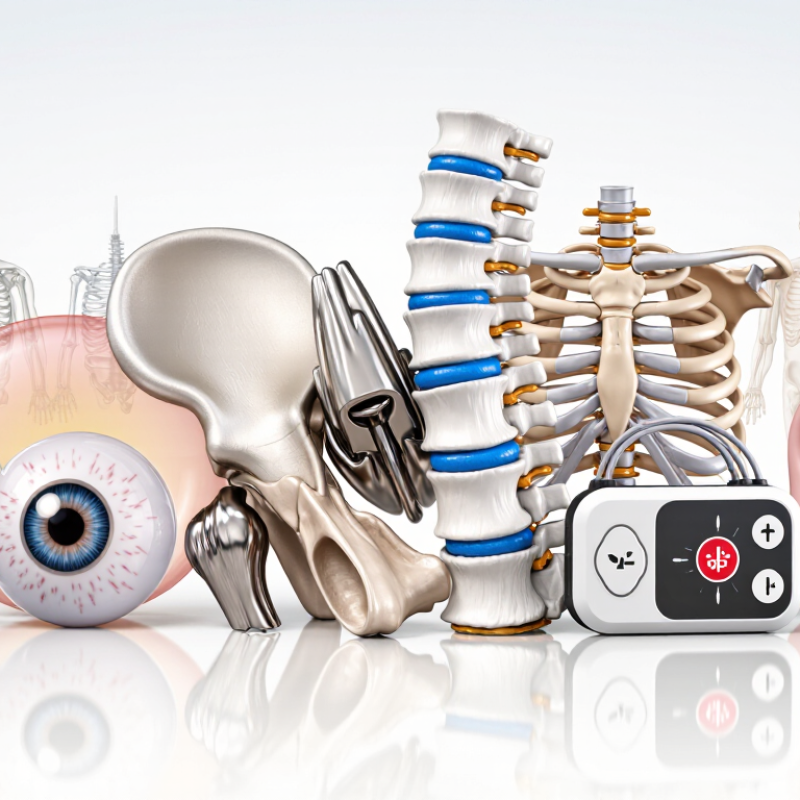
Medical implants are devices placed inside the body to restore function, support damaged tissue, or deliver treatment. They may remain for minutes, months, or a lifetime. Classification begins with purpose and location, not appearance.
Orthopedic implants include hip joints, knee components, spinal cages, and bone plates. Dental implants replace missing tooth roots. Cardiovascular implants include stents, heart valves, and pacemaker systems. Ophthalmic implants, such as intraocular lenses, support vision after lens damage. Neurostimulators and cochlear implants interact with nerves or sensory pathways. Grand View Research estimated the global orthopedic implants market at about USD 43 billion in 2023. Fortune Business Insights placed the dental implants market near USD 5.9 billion that year.
Risk creates another classification. Regulators commonly assess implants by invasiveness, duration, biological contact, and failure consequences. In the United States, higher-risk devices generally require stronger clinical evidence before marketing. Permanent implants demand special attention because the body may react to coatings, metals, polymers, or wear particles. ISO 10993 biological evaluation standards guide testing for tissue contact and irritation, while post-market surveillance tracks complications after use.
Classification is not perfectly tidy. A drug-eluting stent is both structural and therapeutic. A spinal implant may also deliver electrical stimulation. The same device can receive different regulatory treatment across countries. The World Health Organization’s 2023 medical devices report also notes uneven access to device expertise worldwide. That gap matters. Good classification should support safer selection, traceability, informed consent, and long-term follow-up, not merely organize products in a catalogue.
What Are the Top Types of Medical Implants? - What Are Medical Implants and How Are They Classified?
| Implant Type | Typical Location | Primary Medical Purpose | Common Materials | General Classification | Important Considerations |
|---|---|---|---|---|---|
| Orthopedic Joint Implants | Hip, knee, shoulder, ankle, and other joints | Replace damaged joint surfaces and restore movement | Metal alloys, ceramics, and medical-grade polymers | Therapeutic; permanent or long-term; passive | May be cemented or designed for bone ingrowth; wear, loosening, infection, and fracture are recognized risks. |
| Bone Plates, Screws, Rods, and Spinal Implants | Fractured bones and the spine | Stabilize fractures, correct deformity, or support spinal fusion | Titanium alloys, stainless steel, cobalt-chromium alloys, and polymers | Therapeutic; temporary or permanent; passive | Some devices remain in place, while others may be removed after healing; placement depends on bone quality and the injury. |
| Dental Implants | Jawbone, beneath an artificial dental crown, bridge, or denture | Replace the root portion of a missing tooth and support a dental restoration | Commercially pure titanium, titanium alloys, or ceramic materials | Therapeutic; long-term; passive | Successful integration requires adequate bone and healthy soft tissue; oral hygiene and regular dental care are important. |
| Cardiac Pacemakers | Usually beneath the skin of the upper chest, with leads connected to the heart | Deliver electrical impulses when the heart rhythm is too slow or irregular | Titanium or other biocompatible housing, electronic components, and insulated conductor leads | Functional; active; usually long-term | Battery status and device function require follow-up; the generator may eventually need replacement. |
| Implantable Cardioverter-Defibrillators | Usually beneath the skin of the chest, with leads in or near the heart | Detect and treat dangerous ventricular arrhythmias with pacing or an electrical shock | Biocompatible metal housing, electronic components, and insulated leads | Functional; active; long-term | Requires programming and monitoring; battery depletion, lead problems, and inappropriate shocks are possible complications. |
| Heart Valves and Structural Heart Devices | Heart valves or other cardiac structures | Restore one-way blood flow or support the structure of the heart | Pyrolytic carbon, titanium, cobalt-chromium alloys, polymers, or biological tissue | Therapeutic; passive; surgical or catheter-delivered | Mechanical and tissue-based valves have different durability and medication considerations; follow-up is essential. |
| Cochlear Implants | Inner ear, with an external sound processor | Provide electrical stimulation to the auditory nerve for certain types of severe hearing loss | Biocompatible polymer, silicone, ceramic, metal, and electronic components | Functional; active; long-term | Requires surgical implantation, external equipment, rehabilitation, and ongoing device programming. |
| Intraocular Lenses | Inside the eye, generally after removal of a cloudy natural lens | Focus light on the retina and restore vision affected by lens opacity | Foldable acrylic or silicone-based polymers | Therapeutic; passive; usually permanent | The lens is selected according to visual needs and eye measurements; posterior capsule clouding may occur later. |
| Breast Implants | Behind breast tissue or beneath the chest muscle | Reconstruct breast form or increase breast volume | Silicone elastomer shell filled with silicone gel or sterile saline | Reconstructive or cosmetic; passive; long-term but not lifetime devices | Patients need periodic clinical assessment; rupture, capsular contracture, and revision surgery can occur. |
| Vascular Grafts and Stents | Arteries or veins | Restore or maintain blood flow through narrowed, weakened, or damaged vessels | Expanded polytetrafluoroethylene, polyester, nitinol, stainless steel, or cobalt-chromium alloys | Therapeutic; passive; surgical or catheter-delivered | Possible complications include clotting, restenosis, infection, migration, or vessel injury; medication may be prescribed. |
| Drug-Delivery Implants | Eye, skin, brain, or other targeted tissues | Release medication locally and gradually over a specified period | Biodegradable polymers, non-biodegradable polymers, silicone, or drug-containing materials | Therapeutic; passive or controlled-release; temporary or long-term | Duration and removal requirements depend on the device; local tissue reaction and medication-related effects must be monitored. |
Medical implants are commonly classified by their purpose, location, duration of use, material, and whether they are passive or electronically active. Actual device selection depends on the patient’s condition, anatomy, treatment goals, and clinical evaluation.
Related Posts
-

Top 10 Orthopedic Plates and Screws for Global Buyers?
-
How to Select the Right Orthopedic Plates for Your Needs?
-
10 Best Orthopedic Implants Instruments Suppliers?
-
How to Choose the Right Medical Implants for Your Needs?
-
Top 7 Tips for Choosing Orthopedic Surgical Plates for Your Needs
-
Orthopedic Plates and Screws Tips for Better Healing