| Basic Definition |
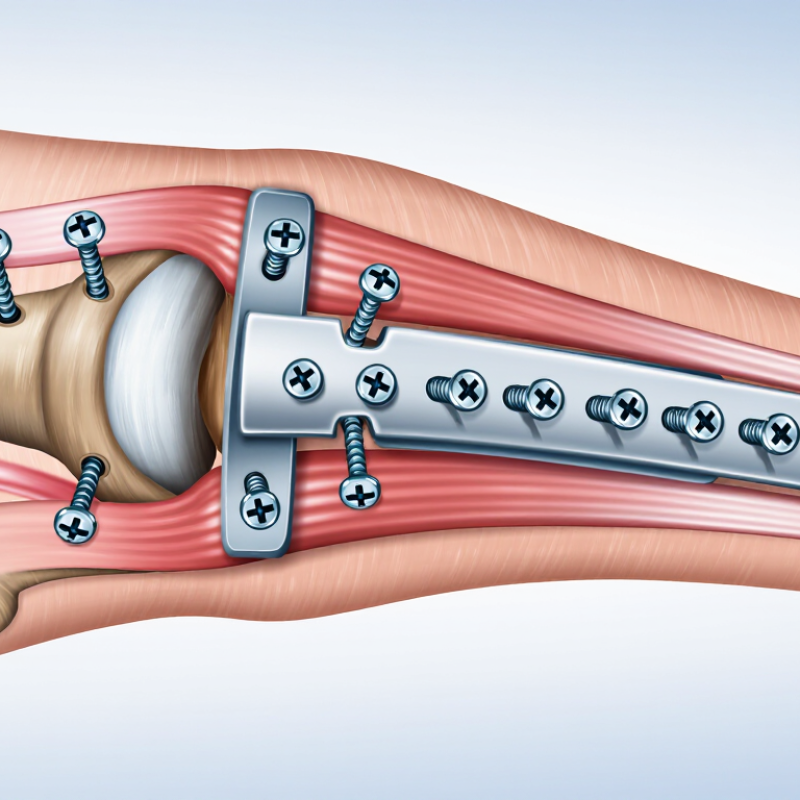
A locking plate is a bone plate that accepts screws designed to lock into the plate. |
The screw head engages a threaded or otherwise locking interface in the plate, creating a fixed-angle connection between the screw and plate. |
It functions as a fixed-angle internal fixation device rather than relying only on plate-to-bone compression. |
| How It Works |
Locked screws and the plate act together as a single construct. |
Loads are transferred through the plate–screw framework while the plate can be positioned slightly away from the bone surface. |
Mechanical stability depends on fracture pattern, plate length, screw placement, bone quality, and construct stiffness. |
| Primary Stability Principle |
Stability is produced mainly by angular stability and bridging of the fracture zone. |
In bridge plating, the plate spans the fracture and preserves relative motion at the fracture site to support callus formation. |
The goal is usually relative stability, not direct compression of every fracture fragment. |
| Common Screw Options |
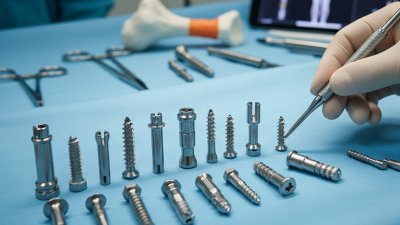
Locking screws, conventional cortical screws, cancellous screws, or combinations may be used depending on the plate system and fracture. |
Some plate designs permit both locking and non-locking screw fixation through combination holes. |
Screw selection and sequence should follow the fracture-reduction and fixation plan. |
| Typical Fracture Patterns |
Comminuted, multifragmentary, metaphyseal, periarticular, and osteoporotic fractures are common indications. |
Fixed-angle support can help maintain alignment when individual fragments are small or when conventional screw purchase is limited. |
Locking plates are not automatically superior for every fracture; the fixation method must match the fracture biology and mechanics. |
| Bone Quality |
They are particularly useful when poor bone quality reduces the holding strength of conventional screws. |
Because the screw locks to the plate, stability is less dependent on the plate being tightly compressed against the bone. |
Locking does not eliminate the risk of screw loosening, cut-out, loss of reduction, or fixation failure. |
| Periarticular Use |
Locking plates can support fractures near joints where fragments are short and the available bone stock is limited. |
Multiple fixed-angle screws may be directed into a joint-adjacent fragment to support the articular region. |
Screw length and position must avoid penetration into the joint surface. |
| Biological Advantages |
The plate may be placed without extensive compression against the periosteal blood supply. |
Reduced disruption of the surrounding soft tissues and fracture hematoma may support the biological healing environment when appropriate surgical techniques are used. |
Soft-tissue handling, surgical exposure, and fracture reduction remain important regardless of plate type. |
| Reduction Method |
Reduction may be achieved before plating or with temporary fixation and reduction tools. |
A locking plate is primarily a fixation device; tightening a locking screw does not reliably pull a displaced fragment toward the plate. |
Accurate reduction should be obtained before final locking when anatomical alignment is required. |
| Load-Bearing Behavior |
The construct may function as a bridge, buttress, neutralization plate, or compression plate depending on the technique. |
Longer plates and appropriate screw distribution can reduce local bending stresses in bridge constructs. |
Overly stiff constructs or insufficient working length may affect callus formation and increase stress concentration. |
| Potential Benefits |
Fixed-angle stability, useful fixation in weaker bone, and support for complex or periarticular fractures. |
Locking constructs can reduce dependence on friction between the plate and bone and may help maintain alignment under functional loads. |
Benefits depend on correct indication, implant positioning, reduction quality, and postoperative management. |
| Potential Limitations |
Higher implant cost, technical demands, difficulty with later removal, and risk of excessive construct stiffness. |
Malpositioned screws, inadequate reduction, poor plate contour, or inappropriate plate length can compromise results. |
Locking technology cannot compensate for incorrect surgical planning or unsuitable biomechanics. |
| Common Complications |
Infection, delayed union, nonunion, malalignment, implant failure, screw penetration, and soft-tissue irritation may occur. |
Complication risk varies with injury severity, soft-tissue damage, patient health, bone quality, and surgical technique. |
Patients require clinical and imaging follow-up to assess healing, alignment, and hardware position. |
| Postoperative Considerations |
Weight-bearing and range-of-motion instructions depend on fracture stability, fixation strength, and healing progress. |
Early controlled motion may be encouraged in selected fractures, while weight-bearing may need to be restricted until sufficient healing is present. |
The treating orthopedic surgeon determines rehabilitation based on the individual case. |
| When It May Not Be the Best Choice |
Simple fractures that can be reliably treated with other methods may not require a locking plate. |
Alternatives can include non-locking plates, intramedullary nails, screws alone, external fixation, or nonoperative care. |
Decision-making should consider fracture morphology, soft-tissue condition, patient factors, and expected mechanical demands. |