7 Best Orthopedic Implants Businesses for Global Buyers?

The global orthopedic implants market is expanding, but buyers should look beyond impressive sales figures. Fortune Business Insights estimates the market reached approximately USD 47.9 billion in 2023 and may exceed USD 68.9 billion by 2032. Grand View Research reports different figures, reflecting varied product definitions and research methods. That difference matters. Market data is useful, but it is not a purchasing decision.

This guide examines seven orthopedic implants businesses for global buyers, focusing on product quality, regulatory readiness, clinical evidence, distribution strength, and after-sales support. Companies are assessed across joint replacement, trauma fixation, spinal systems, and sports medicine products. Relevant evidence includes ISO 13485 quality certification, U.S. FDA registrations, European regulatory compliance, published clinical outcomes, and transparent recall histories. The FDA’s device databases and the International Organization for Standardization provide practical reference points for verification.

A reliable orthopedic implants business should also demonstrate dependable supply planning. A delayed hip stem or missing locking screw can disrupt an operating schedule. Buyers should therefore review lead times, sterilization controls, surgeon training, lot traceability, and local service capability. These details often matter more than polished brochures. Not every large manufacturer fits every hospital, and no ranking can remain universally correct across regions. Prices, reimbursement systems, import rules, and surgical preferences vary considerably. The following overview offers a structured starting point, not a substitute for clinical, regulatory, or procurement due diligence. Some company information may change faster than published reports. Readers should verify current certifications and approvals before signing contracts.
7 Best Orthopedic Implants Businesses for Global Buyers?

Orthopedic Implants: Scope, Types, and WHO’s 1.71B-Person Burden

Orthopedic Implants: Scope, Types, and WHO’s 1.71-Billion-Person Burden

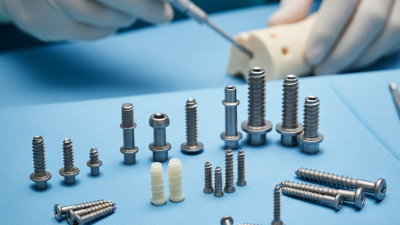
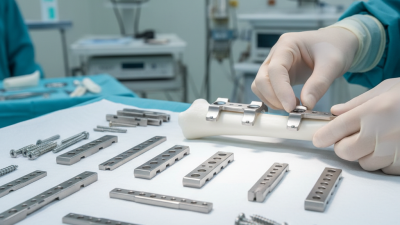
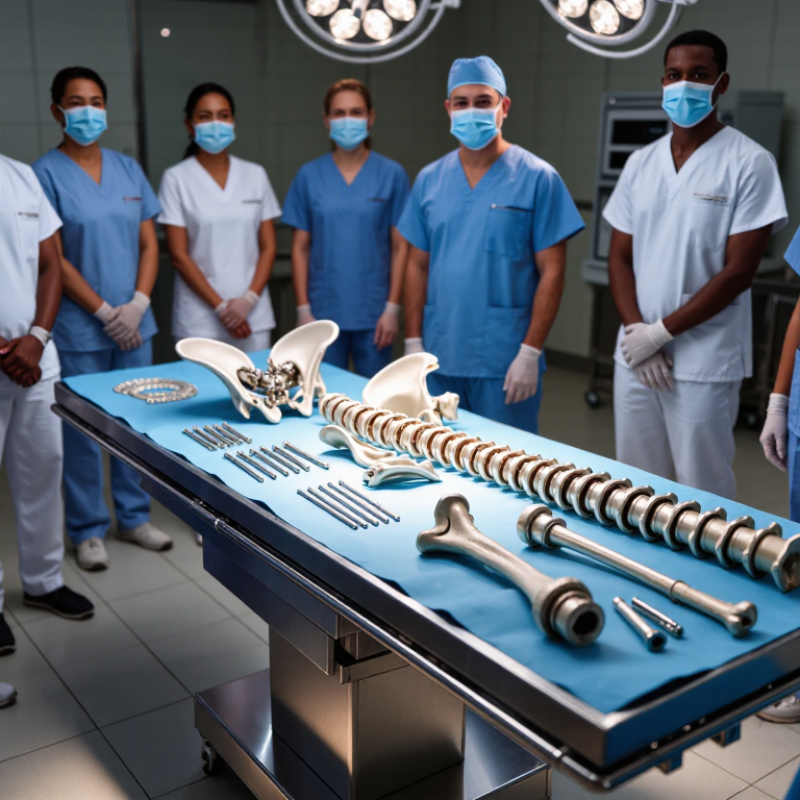
Orthopedic implants support bone repair, joint replacement, spinal stabilization, and trauma care. Common types include plates, screws, intramedullary nails, hip and knee prostheses, spinal cages, and fixation anchors. Their materials often include titanium alloys, cobalt-chromium, stainless steel, and advanced polymers. Each choice affects strength, imaging compatibility, wear, and surgical handling.

The World Health Organization reports that about 1.71 billion people live with musculoskeletal conditions worldwide. Low back pain remains the leading contributor to disability, according to the Global Burden of Disease Study 2021, published in The Lancet Rheumatology. Aging populations, road injuries, workplace trauma, and sports participation continue to expand clinical demand. However, patient volume alone should not guide purchasing decisions.

Global buyers should examine regulatory clearance, clinical evidence, sterilization validation, material traceability, and surgeon training. The International Organization for Standardization’s ISO 13485 framework remains a key reference for medical-device quality systems. Buyers should also assess implant fatigue testing, packaging integrity, batch records, and post-market surveillance. Small details matter.

A polished catalog can still hide practical gaps. Product availability may not equal local surgical suitability. In some markets, evidence is less transparent than advertising. That deserves scrutiny. Careful buyers compare published data, operating-room feedback, revision rates, and total treatment costs before selecting suppliers.

How to Rank the 7 Best Businesses: Clinical, Quality, and Supply Metrics

Ranking the seven best orthopedic implant businesses requires more than catalog size or polished sales presentations. Clinical performance should lead the assessment. Review peer-reviewed studies, revision rates, implant survival, and complication data across patient groups. Surgeon feedback also matters, especially when it reflects real operating-room conditions.

Quality evidence must be visible and current. Check regulatory approvals, manufacturing audits, material traceability, sterilization controls, and complaint-handling procedures. Ask for batch records and independent test results. Supply performance deserves equal attention. Measure average lead times, order accuracy, inventory depth, and emergency replacement capacity. A reliable supplier should provide clear documentation and stable communication.

Tips: Build a weighted scorecard before comparing suppliers. Give clinical outcomes greater weight than marketing claims. Verify at least three years of performance data where possible. Request references from hospitals with similar procedure volumes. Inspect packaging details, such as moisture barriers and lot labels. Test a small, compliant order before expanding procurement.

A ranking is never perfect. Data may be incomplete, and hospital feedback can be subjective. That weakness should be recorded, not hidden. Buyers should also examine training support, surgeon education, and post-market monitoring. The best business is not always the cheapest one. It is the partner that combines dependable evidence, controlled quality, and predictable delivery when a patient is waiting.

The 7 Best Implant Businesses: Portfolios, Approvals, and Global Reach

The seven strongest orthopedic implant businesses serve distinct clinical needs: joint replacement, trauma fixation, spine systems, sports medicine, deformity correction, extremity reconstruction, and patient-specific implants. A broad portfolio matters, but clinical depth matters more. The World Health Organization estimates that 1.71 billion people live with musculoskeletal conditions worldwide. This supports sustained demand, yet demand alone cannot prove product quality.

Global buyers should examine regulatory approvals, manufacturing controls, and post-market evidence. ISO 13485 certification indicates a structured medical-device quality system, while approval from a recognized authority supports market entry. However, approval is not the same as universal acceptance. The European Union’s Medical Device Regulation requires deeper clinical and technical documentation than many older systems. That difference can affect launch timing and purchasing risk.

Grand View Research reports continued expansion in the global orthopedic devices market, driven by aging populations and surgical demand. The strongest businesses usually combine implant portfolios with instruments, training, traceability, and local service. Their distribution networks should cover major hospitals without creating long replacement delays. Look closely at sterilization records, revision rates, surgeon feedback, and warranty terms. Some catalogs appear impressive but lack independent clinical follow-up. That is a weakness worth challenging. Country-specific registration, importer responsibility, and language requirements also need verification before any contract.

Global Orthopedic Implant Supplier Comparison

This anonymized comparison evaluates seven major orthopedic implant business profiles using three practical buyer criteria: portfolio breadth, regulatory approval coverage, and international market reach. Scores are normalized to a 100-point scale from publicly available corporate, regulatory, and distribution information; they are comparative indicators rather than reported financial results.

Reference framework: public regulatory databases, corporate annual reports, product catalogs, and disclosed regional operations.

Regulatory Gateways: FDA 510(k), EU MDR, and ISO 13485 Compliance

Global buyers assessing the seven best orthopedic implant businesses should begin with regulatory evidence, not polished catalogs. A supplier’s quality system should support traceability from raw titanium to packaged implant. ISO 13485 certification is a practical starting point. It shows controlled design, purchasing, production, complaints, and corrective actions. Ask for certificate scope, issuing body, expiry date, and audited sites. Small details matter.

For the United States, FDA 510(k) clearance may demonstrate substantial equivalence to a legally marketed device. Buyers should verify the exact product code, intended use, indications, materials, and cleared configurations. A clearance letter alone is insufficient. Review labeling, sterilization validation, biocompatibility evidence, and post-market reporting procedures. In my experience, mismatched model numbers create avoidable delays. The paperwork looked complete. It was not.

Selling into Europe requires attention to the EU MDR, classification, clinical evaluation, technical documentation, and post-market surveillance. Confirm the notified body’s role when certification is required, and check the declaration of conformity. Also examine UDI readiness and vigilance procedures. Regulatory claims should match the implant delivered, not merely a similar family. I would request sample records, audit summaries, and change-control examples before approval. No supplier file is perfect. That is where careful questioning becomes useful. A reliable partner can explain gaps, timelines, and corrective actions without evasion.

7 Best Orthopedic Implants Businesses for Global Buyers? - Regulatory Gateways: FDA 510(k), EU MDR, and ISO 13485 Compliance

A buyer-focused comparison of seven orthopedic implant product segments and the regulatory checks commonly relevant to sourcing them. Regulatory pathways depend on the device’s intended use, design, risk classification, and market; this table does not rank or identify individual businesses.

Implant segment Buyer evaluation focus U.S. FDA gateway European Union gateway Quality-system evidence
Hip joint implants Check intended use, materials, fixation method, compatibility of components, and availability of clinical and performance evidence. The pathway is device-specific. Many devices may use 510(k) clearance when substantial equivalence is established; some higher-risk devices may require PMA. Verify applicable MDR conformity assessment, device classification, technical documentation, and CE marking where required. Request evidence of an implemented medical-device QMS, such as ISO 13485 certification, and confirm its scope and validity.
Knee joint implants Review implant materials, design variants, instrument sets, labeling, and evidence supporting the intended patient population and use. Confirm the specific FDA product code and classification. A 510(k) may apply where a suitable predicate and substantial-equivalence basis exist; requirements vary by device. Check MDR classification and conformity-assessment route with the relevant notified body, as applicable, and verify current CE-marking documentation. Review QMS certification, supplier controls, traceability, complaint handling, and post-market processes.
Spinal implants Assess intended spinal indication, materials, mechanical performance, imaging compatibility, and any restrictions on use with other components. Pathways differ among spinal device types and intended uses. Confirm whether the specific device follows 510(k), PMA, or another applicable FDA route. Determine MDR classification and required conformity assessment from the device’s intended purpose and risk profile; verify applicable technical documentation. Check ISO 13485 certificate scope alongside design-control, risk-management, and production records relevant to the device.
Trauma fixation plates and screws Compare material specifications, dimensions, compatible instruments, sterilization status, and mechanical test evidence. Check the exact device classification and product code. A 510(k) may be appropriate for devices with a valid substantial-equivalence basis; do not assume a route from product category alone. Verify MDR classification, conformity-assessment documentation, and CE-marking status for the specific device and intended use. Request traceability and production-control evidence, plus a current QMS certificate covering the relevant manufacturing activities.
Intramedullary nails Review indications, available sizes, locking options, material and fatigue-test evidence, and compatibility of associated instruments. Confirm the device-specific FDA classification and submission status. The appropriate pathway depends on design and intended use. Check MDR classification, conformity-assessment route, technical file support, and CE marking where applicable. Evaluate QMS evidence, lot identification, nonconformance controls, and procedures for handling field feedback.
Bone graft substitutes and bone void fillers Clarify composition, origin, intended use, handling instructions, storage conditions, and evidence supporting performance claims. Regulatory status is highly dependent on composition and intended use. Confirm whether the product is regulated as a device and identify its specific FDA pathway. Determine applicable MDR status and classification based on composition, intended purpose, and claims; confirm the required conformity assessment. Check QMS scope and review relevant controls for materials, suppliers, shelf life, packaging, and storage.
External fixation systems Assess frame configurations, adjustability, compatible pins and instruments, labeling, and mechanical performance information. Identify the exact FDA classification and applicable submission route for the system and its components; a 510(k) is not universal. Verify MDR classification and conformity-assessment documentation for the system and relevant components. Request current ISO 13485 evidence, if claimed, and confirm that its scope covers the relevant design and manufacturing operations.

Buyer note: FDA 510(k) is a premarket notification pathway based on substantial equivalence, not a universal approval route; some devices require PMA or another applicable pathway. EU MDR (Regulation (EU) 2017/745) conformity requirements depend on device classification and intended purpose. ISO 13485:2016 is a quality-management-system standard; certification alone does not establish regulatory authorization for a device. Verify current records with the relevant authorities and conformity-assessment bodies before purchase.

Global Buyer Due Diligence: UDI, Traceability, Service, and Total Cost

For global buyers, an implant’s quoted price is only one part of the decision. Check whether each product has the identifiers and documentation required in its destination market; UDI rules and implementation details can differ. Ask suppliers to demonstrate how a label connects to the device record, production lot, sterilization information, and expiry date. Request a sample record, not just a presentation. Can your team trace a specific implant from receipt to patient documentation? This is easy to overlook.

Traceability should work in daily operations, including when packaging is damaged or inventory moves between facilities. Review how quickly the supplier can provide accurate records and explain the process for handling complaints or field notices. Service matters too: clarify response times, language support, staff training, and access to compatible instruments. Total cost includes freight, storage, instrument maintenance, replacement stock, and the time spent resolving documentation gaps. Compare these costs over a realistic purchasing period, not only at the first order. A spreadsheet can look complete and still hide assumptions. Some buyers may also need to test the workflow with a small, controlled evaluation before making broader commitments.