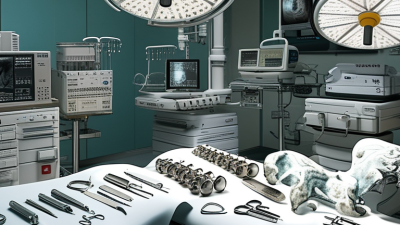
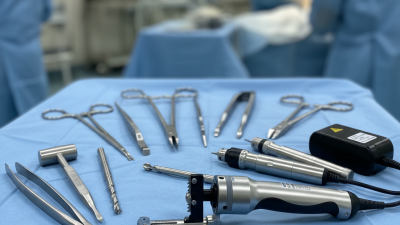
Choosing a spine instrument set in 2026 requires more than comparing prices or counting pieces. Global buyers now assess surgical purpose, material quality, compatibility, and supplier reliability. A dependable spine instrument should support controlled handling during decompression, fixation, or alignment procedures. Its surface should tolerate validated cleaning and sterilization cycles without hiding debris in narrow joints.
Small details matter. A locking knob that slips can delay a procedure. A poorly marked depth gauge can invite avoidable measurement errors. These concerns sound practical, but procurement teams sometimes overlook them while chasing low unit costs. That is where experience becomes useful. Surgeons, sterile processing staff, and biomedical engineers may notice different risks. Their feedback should shape the final specification.
This overview examines major spine instrument types for hospitals, distributors, and specialized purchasing groups worldwide. It considers retractors, rongeurs, curettes, forceps, screwdrivers, trials, distractors, and systems designed for specific implant platforms. Not every familiar tool deserves automatic inclusion. Some sets appear comprehensive yet contain duplicates, fragile components, or instruments that local teams rarely use. Buyers should review documented testing, inspection records, traceability, warranty terms, training support, and published instructions for use. Regional registration and import requirements also need careful verification before purchase.
A catalogue cannot prove suitability. Standards and hospital policies can differ. A credible supplier explains limitations, not only advantages. No single “best” set fits every operating room, surgeon preference, or healthcare budget. This guide compares practical value with clinical relevance, while acknowledging an uncomfortable point: even a well-designed set can fail when maintenance, training, or compatibility checks are weak. Careful selection remains a shared responsibility.
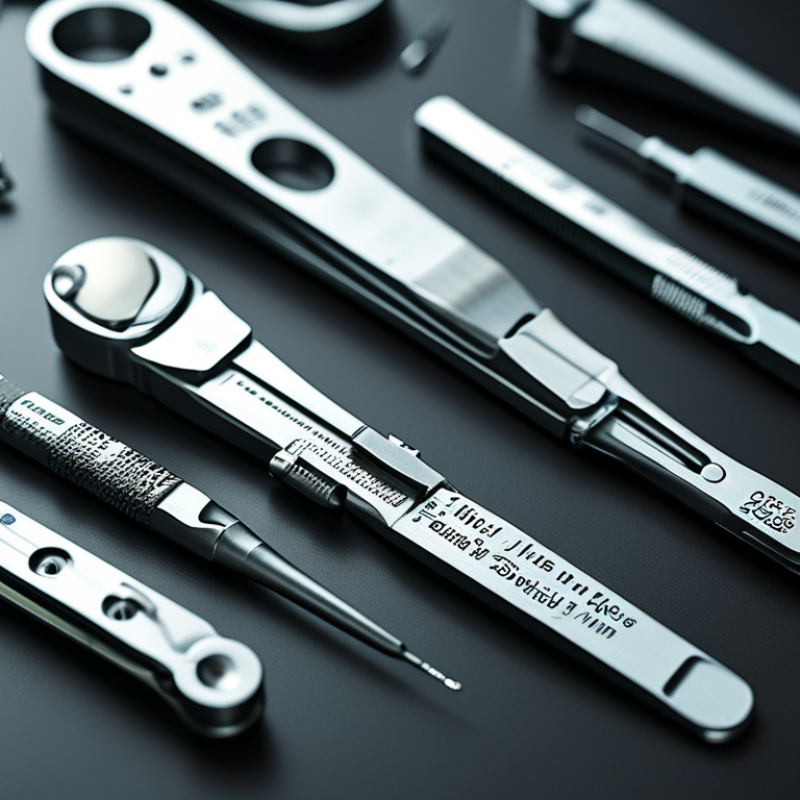
For global buyers, spine instrument taxonomy should start with the procedure, not the catalog page. The World Health Organization reports that low back pain affected 619 million people in 2020. The Global Burden of Disease Study 2021 also identifies low back pain as the leading cause of disability worldwide.
Decompression sets support tissue removal and neural release. Typical contents include Kerrison rongeurs, curettes, punches, nerve hooks, and narrow retractors. Buyers should check jaw alignment, shaft length, tip visibility, and resistance under repeated sterilization. Small details matter. A poorly balanced punch can increase hand fatigue during a long lumbar procedure. Some procurement teams still focus too heavily on quantity.
Fusion sets require a different structure. Pedicle screwdrivers, taps, probes, rod holders, reduction tools, torque-limiting handles, trial spacers, and graft packers should work as one system. The OECD’s Health at a Glance 2023 shows major differences in surgical capacity and healthcare resources across countries. Modular sets may therefore suit hospitals with varied case volumes and training levels.
Navigation sets add reference frames, registration pointers, trackers, calibration tools, sterile covers, and compatible instruments. Their value depends on workflow accuracy, not only hardware. Navigation failures can involve setup, line-of-sight blockage, or registration drift. The taxonomy has grey zones. Buyers should review actual operating-room steps, sterilization records, local regulatory requirements, and staff training before approving a final set.
The World Health Organization reported that 619 million people experienced low back pain in 2020. This figure shows a major global health burden, not automatic demand for spinal surgery. Many patients improve through exercise, education, and nonoperative care. Surgical instruments should support carefully selected cases.
For global buyers, useful spine instrument types include decompression sets, pedicle screw systems, interbody preparation tools, retractors, and navigation-compatible instruments. Each type serves a different clinical need. A busy hospital may require modular trays for lumbar decompression and fixation. A smaller center may value compact sets with clear sterilization workflows.
Quality is more than sharp edges or polished metal. Buyers should check material traceability, fatigue resistance, cleaning instructions, and compatibility with local equipment. Training matters too. A technically strong instrument can still create problems when staff lack practical instruction. That happens.
Procurement teams should review clinical evidence, regulatory documentation, service support, and total ownership cost. They should also ask whether replacement parts are available locally. In my assessment, “best” is rarely one universal choice. Patient anatomy, surgeon experience, hospital volume, and infrastructure change the answer. The WHO statistic encourages broader access, but it does not justify careless expansion of surgical capacity. Better purchasing begins with realistic case data, not impressive catalogs.
In 2026, global spine buyers will need more than broad instrument catalogs. WHO’s 2023 low back pain fact sheet reports 619 million affected people in 2020, potentially reaching 843 million by 2050. This demand increases pressure on hospitals to select durable, precise, and serviceable core instruments.
Kerrison rongeurs should offer controlled biting, clear jaw alignment, and several shaft lengths. A 1 mm bite may support delicate decompression, while larger bites can improve efficiency. Retractors need stable blades, smooth locking, and practical depth markings. Poor locking can shift during tissue exposure. That is not a minor inconvenience.
Disc preparation tools require careful matching with the surgical approach. Curettes, shavers, and trial instruments should provide tactile feedback without excessive force. The Global Burden of Disease Study 2021, published in The Lancet Rheumatology, identifies low back pain as a leading cause of disability worldwide. Yet, procurement teams sometimes focus heavily on unit price. That approach can overlook sterilization cycles, repair intervals, and staff familiarity.
A useful evaluation should record jaw wear, retractor stability, and cleaning time during simulated procedures. These details create stronger evidence than brochures. I would also question universal tray designs. They may simplify purchasing, but unused instruments increase processing workload and cost. The best selection is often procedure-specific, measurable, and slightly less convenient.
| Instrument Category | Instrument Type | Primary Surgical Purpose | Typical Working-End Options | Common Size or Geometry Choices | Typical Material | Key Buying Considerations | Typical Reprocessing Profile |
|---|---|---|---|---|---|---|---|
| Kerrison Rongeurs | Up-biting Kerrison rongeur | Removes small amounts of bone during laminectomy, laminotomy, and decompression procedures. | Upward-facing jaw with a narrow, cutting footplate. | Common bite widths include approximately 1–5 mm; available with straight or angled shafts and different working lengths. | Surgical stainless steel; some models use hardened or coated components at the cutting mechanism. | Check jaw alignment, bite consistency, handle ergonomics, shaft visibility, spring action, and access to narrow operative fields. | Usually reusable Validated cleaning and steam sterilization are commonly used when permitted by the instrument instructions. |
| Kerrison Rongeurs | Down-biting Kerrison rongeur | Resects bone projecting downward or adjacent to the dura, especially in confined posterior spinal anatomy. | Downward-facing jaw with a compact cutting profile. | Common bite widths include approximately 1–5 mm; straight, curved, and angled shaft configurations are available. | Surgical stainless steel with corrosion-resistant finish. | Evaluate the footplate profile, jaw opening, handle force, tactile feedback, and suitability for the intended spinal level. | Usually reusable Must be fully disassembled or opened as instructed before cleaning and sterilization. |
| Kerrison Rongeurs | Angled or bayonet Kerrison rongeur | Provides a clearer line of sight and improved hand clearance in cervical, thoracic, and minimally exposed approaches. | Angled shaft, offset handle, or bayonet-style profile. | Typical shaft angles range from modest offsets to approximately 90 degrees, depending on the access requirement. | Surgical stainless steel. | Compare angle, shaft length, bite direction, visibility of the tip, and compatibility with the surgeon’s approach. | Reusable Moving joints require thorough flushing, lubrication where specified, and function checks. |
| Retractors | Self-retaining tubular or expandable retractor | Maintains a stable corridor for minimally invasive or limited-exposure spinal procedures. | Round, oval, or expandable blades with fixed or adjustable opening. | Working diameters commonly range from approximately 16–60 mm; working lengths often range from about 40–180 mm. | Stainless steel, titanium, or sterilizable surgical-grade polymer components, depending on the design. | Assess blade radii, expansion control, tissue pressure distribution, radiolucency needs, and compatibility with the holding arm. | Reusable or single-use Reusable versions require cleaning of joints, channels, and detachable blades. |
| Retractors | Blade-based lateral retractor | Retracts paraspinal muscles and soft tissue during open lumbar or thoracolumbar exposure. | Smooth, toothed, fenestrated, or radiolucent blades. | Blade widths commonly range from approximately 20–80 mm; blade depths vary by patient anatomy and approach. | Stainless steel, titanium, or radiolucent composite materials. | Prioritize atraumatic edges, secure locking, blade interchangeability, depth visibility, and resistance to unintended movement. | Usually reusable Inspect blade edges, locking mechanisms, and attachment points after every cycle. |
| Retractors | Anterior cervical retractor | Separates soft tissues and maintains exposure during anterior cervical discectomy and fusion procedures. | Broad, shallow blades with smooth or gently curved tissue-contacting surfaces. | Blade widths commonly range from approximately 12–35 mm, with different depths for cervical anatomy. | Surgical stainless steel or titanium. | Review blade contour, atraumatic profile, locking stability, radiographic visibility, and compatibility with the selected access route. | Reusable Clean blade-to-frame interfaces carefully and verify secure assembly before use. |
| Disc Preparation Tools | Pituitary disc rongeur | Grasps and removes disc fragments or nucleus material during discectomy. | Fenestrated cup jaws with straight, angled, or curved shafts. | Common cup widths are approximately 1–5 mm; shaft lengths and angles are selected for lumbar or cervical access. | Surgical stainless steel. | Check cup closure, jaw sharpness, shaft stiffness, tip visibility, and the ability to retrieve material without excessive tissue engagement. | Usually reusable Flush the cup and shaft thoroughly; verify that the jaws close completely after reprocessing. |
| Disc Preparation Tools | Disc curette | Removes residual disc material and prepares vertebral endplates during interbody fusion procedures. | Ring, angled, scoop, or rake-shaped working ends. | Typical working widths range from approximately 2–8 mm; straight and angled versions support different approach angles. | Surgical stainless steel or titanium. | Compare tip aggressiveness, edge profile, shaft angle, tactile control, and the risk of unintended endplate damage. | Usually reusable Inspect the working edge for deformation and clean any recesses around the curette tip. |
| Disc Preparation Tools | Disc knife or annulotomy knife | Creates or enlarges an opening in the annulus fibrosus to enable disc access. | Single-bevel, double-bevel, pointed, or guarded blade profiles. | Blade lengths and angles vary by cervical, lumbar, anterior, posterior, or minimally invasive approach. | Stainless steel blade with a stainless steel or polymer handle. | Evaluate blade sharpness, guard design, handle control, tip visibility, and safe storage to prevent edge damage. | Reusable or single-use Follow the applicable device instructions; inspect the blade before each procedure. |
| Disc Preparation Tools | Interbody disc shaver or rasp | Removes disc material and prepares vertebral endplates before placement of an interbody implant. | Rasping, serrated, toothed, or abrasive working surfaces. | Common widths approximately follow implant sizing ranges, often around 6–14 mm; straight and angled shafts are available. | Stainless steel or titanium. | Match the instrument size to the implant system, verify depth markings, assess handle ergonomics, and avoid excessive endplate removal. | Reusable or single-use Clean teeth and depth-marking areas thoroughly; confirm the working surface is intact. |
| Disc Preparation Tools | Endplate scraper or ring curette | Removes cartilaginous endplate tissue while preserving the underlying bony endplate during fusion preparation. | Ring, oval, angled, or offset scraping tips. | Typical widths range from approximately 4–12 mm, with multiple working lengths and angles. | Surgical stainless steel or titanium. | Consider edge durability, depth control, tactile feedback, access angle, and compatibility with the planned implant footprint. | Usually reusable Inspect the scraping edge and clean all transitions between the tip and shaft. |
| Disc Preparation Tools | Bone graft impactor or inserter | Delivers and gently compacts graft material into a prepared interbody space. | Flat, convex, bullet, or implant-specific tips. | Tip dimensions commonly range from approximately 6–14 mm, with length selected for the surgical approach. | Stainless steel, titanium, or sterilizable polymer tip components. | Check tip geometry, depth markings, handle balance, graft retention, and compatibility with the intended implant cavity. | Reusable or single-use Clean channels and detachable tips according to the applicable instructions. |
Fusion systems remain central to many spinal procedures, but their value depends on fit, control, and reliable handling. A practical system may include pedicle screws, rods, cages, and interbody instrument sets. Each component should support accurate placement and stable alignment. Pedicle screws need clear size markings and dependable insertion control. Rods should offer suitable contouring options without excessive force. Small details matter.
Cages and interbody tools require careful attention. Trial instruments should provide tactile feedback during sizing. Delivery instruments must hold the cage securely and release it smoothly. Some systems look complete on paper, yet their instruments may feel awkward in a real operating room. That gap deserves honest evaluation.
Surgeons should review compatibility, imaging visibility, sterilization methods, and training requirements before purchase. Local regulatory approval and technical documentation also need verification.
Tips: Build a sample set for hands-on assessment. Test screwdrivers, rod holders, compressors, distractors, trials, and inserters together. Check whether staff can identify each tool quickly. Ask for cleaning instructions and replacement-part support. Keep records of lot numbers and maintenance checks. Do not judge a system by packaging alone. A quieter, simpler instrument may improve workflow more than a larger set. Human feedback is essential, and early assumptions can be wrong.
Global buyers need more than a polished catalogue when selecting spine instruments in 2026. Rongeurs, curettes, retractors, punches, and trial instruments should match the procedure, anatomy, and handling preference. Start with the regulatory file. Confirm whether FDA 510(k) clearance applies to the exact configuration. A similar device family may not cover every jaw, coating, or size. Ask for the clearance number, intended use, predicate comparison, and current labeling. Do not accept a certificate alone.
ISO 13485:2016 evidence should cover the manufacturing site and relevant device scope. Check the scope. Review design controls, supplier controls, complaint handling, and corrective-action records. Request batch traceability from raw material to final inspection. A practical weakness in many purchasing reviews is relying on expired or incomplete documents. I would verify certificate dates, certification bodies, and production-site addresses independently.
For stainless steel instruments, ASTM F899 documentation can support material evaluation. Check the specified alloy, heat treatment, corrosion resistance testing, and mechanical requirements. Small gaps matter. The instrument’s surface finish should support cleaning and repeated processing without creating difficult crevices. Ask for inspection records showing jaw alignment, cutting performance, dimensional tolerances, and fatigue testing where relevant. Sterilization instructions must match the intended reusable or single-use design. Some suppliers provide impressive samples but limited validation data. That deserves a second review before clinical purchasing.