What Are the Top 10 Surgical Supplies for Global Buyers?

Choosing the right surgical supplies is a practical challenge for global buyers. Hospitals, clinics, and distributors need dependable products, not impressive catalog language. A sterile dressing, surgical glove, or suction catheter can affect workflow within seconds. Small packaging details matter. Clear labeling matters even more.

This guide examines ten widely purchased surgical supplies across international healthcare markets. The selection considers clinical purpose, material quality, sterility, packaging, shelf life, and supplier consistency. It also reflects the daily realities of procurement teams, including shipment delays, changing demand, and incomplete product information. No list is universal. That is worth remembering. A rural clinic may prioritize durable examination gloves, while a large operating center may require advanced wound-care products. Buyers should verify applicable standards, documentation, traceability, and local regulatory requirements before placing orders. Product claims should be supported by reliable technical files and inspection records. Price alone can create expensive mistakes. A low-cost item may increase waste, replacement frequency, or clinical risk. We will highlight what each product does, where it fits, and which purchasing details deserve closer attention. The discussion is practical, but not perfect. Supplier performance can change, and even experienced teams can overlook a small specification. Good sourcing requires careful questions, documented comparisons, and honest review after delivery. These habits help global buyers build safer, more resilient surgical supply chains.
What Are the Top 10 Surgical Supplies for Global Buyers?

What Surgical Supplies Are and Why They Matter in Global Healthcare

What Are the Top 10 Surgical Supplies for Global Buyers?

What Surgical Supplies Are and Why They Matter in Global Healthcare

Surgical supplies are practical tools supporting sterile preparation, tissue closure, bleeding control, injection, and postoperative care. Common categories include gloves, gowns, masks, drapes, sutures, needles, syringes, scalpels, hemostatic products, and wound dressings. Each item controls a specific risk. A sterile drape protects the surgical field; a suture restores tissue continuity. Quality depends on sterility, biocompatibility, packaging integrity, size range, and traceability.

Why do they matter? Small failures can cause serious delays. The WHO 2022 Global Report on Infection Prevention and Control reports healthcare-associated infection rates of about 7 in 100 acute-care patients in high-income countries. The estimate rises to 15 in 100 in low- and middle-income countries.

This gap makes gloves, drapes, dressings, and reliable sterile packaging more than routine purchases. Buyers should examine manufacturing controls, biocompatibility evidence, sterile-barrier validation, expiry dates, and shipment conditions. Standards help, but paperwork alone cannot prove consistent performance.

Cost comparisons can mislead. An inexpensive suture may involve inconsistent handling, weak packaging, or poor lot traceability. Those problems increase waste and delay, even when the invoice looks attractive. The Lancet Commission on Global Surgery estimated that five billion people lack access to safe, affordable surgical and anesthesia care.

In these settings, supply selection must match local skills, sterilization capacity, electricity, and repair resources. Procurement becomes less tidy.

Not every imported product fits every operating room. Buyers need technical files, independent test reports, complaint records, and clear instructions for use.

Packaging appearance is not proof of quality.

How the Top 10 Surgical Supplies Are Classified and Selected

Global buyers usually classify the top ten surgical supplies by function, risk, and frequency of use. The group includes sterile gloves, gowns, masks, drapes, scalpels, forceps, retractors, sutures, hemostatic materials, and suction tubing. Protective supplies create a controlled field. Cutting and grasping tools support tissue handling. Closure and bleeding-control products help complete the procedure safely.

Selection should match the operation, facility, and patient needs. Buyers should check sterility status, material composition, package integrity, shelf life, and traceability records. A clear size range matters too. Poorly fitted gloves can reduce dexterity. Weak suction tubing may collapse during use.

For reusable instruments, corrosion resistance and cleaning compatibility deserve close attention. Local registration and import requirements must also be verified before purchase. In practice, low prices can look attractive, but inconsistent quality creates hidden costs. I have seen product comparisons focus too much on unit price. That approach needs reconsideration.

Tips: Build a category-based purchasing list. Request samples when practical. Test grip, flexibility, visibility, and package opening. Compare technical documents, not only photographs. Keep backup suppliers for critical items, but do not change specifications casually. Document each decision for clinical and procurement review. A small detail can matter.

The Top 10 Surgical Supplies Used in Hospitals Worldwide

What Are the Top 10 Surgical Supplies for Global Buyers?

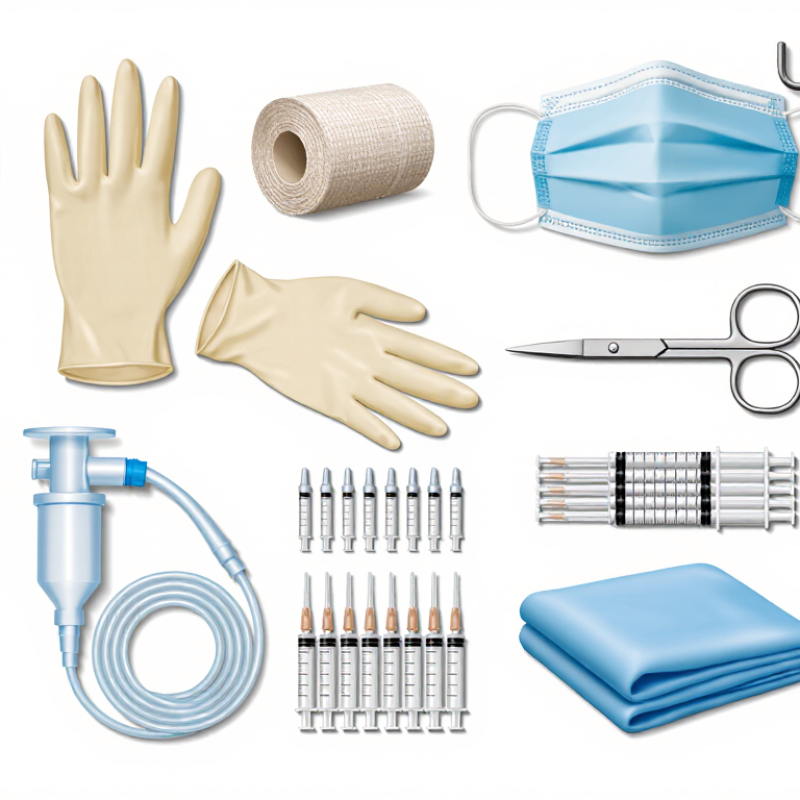
Hospitals worldwide rely on ten core surgical supplies: sterile gloves, surgical masks, protective gowns, drapes, gauze, sutures, scalpels, needles, syringes, and suction tubing. These items support nearly every operating-room procedure. Their quality affects sterility, handling, and patient safety.

The WHO Global Guidelines for the Prevention of Surgical Site Infection reports infection rates near 11% in low- and middle-income countries. In higher-income settings, rates commonly range from 2% to 5%. WHO’s 2022 Global Report on Infection Prevention and Control also estimates that strong prevention programmes can reduce healthcare-associated infections by up to 70%. Therefore, buyers should examine more than unit prices. Packaging integrity, sterile-barrier performance, expiry dates, traceability, and storage conditions matter. A cheap surgical pack can become expensive after wastage or failed quality checks. The list is practical, but not perfect. Specialty hospitals may need implants, advanced drains, or procedure-specific instruments.

Tips: Match supplies with local procedures, staff training, and climate conditions. Verify recognized regulatory documentation and batch records. Check glove sizing at the point of use. Test suction tubing for secure connections before surgery. Keep backup stock for gauze, sutures, and sterile gloves. Procurement teams should review supplier performance quarterly, using delivery accuracy, defect rates, and complaint response time. Mistakes happen. A simple checklist can prevent avoidable shortages.

What Global Buyers Should Check Before Purchasing Surgical Supplies

What Are the Top 10 Surgical Supplies for Global Buyers?

Global buyers should assess surgical supplies beyond price and product photos.

Common categories include surgical gloves, masks, gowns, drapes, sutures, scalpels, forceps, syringes, sterilization pouches, and wound dressings. Each item should match the procedure, clinical setting, and expected usage volume. Materials must be clearly identified, with sizes, dimensions, packaging details, and shelf life stated.

Request technical documents before placing an order. These may include certificates, test reports, sterilization records, and lot traceability information.

Check whether the supplier follows recognized quality systems and maintains consistent inspection procedures. Packaging should protect sterile products from moisture, crushing, and contamination during long-distance transport.

Ask about storage temperatures and shipping conditions, especially for temperature-sensitive items. A low price can appear attractive, but weak packaging may create hidden costs. This is often underestimated.

Tips:

Compare samples from different production lots. Inspect seals, labels, texture, and usability. Confirm the exact quantity per carton. Review the product specifications with clinical staff, not only purchasing teams.

Allow time for independent quality checks. Delivery speed matters. So does reliable communication. Buyers should also document complaints and corrective actions.

No supplier is perfect, and a missed detail can expose a purchasing decision that needs reconsideration. Better records support safer, more accountable procurement.

How Quality, Compliance, Pricing, and Logistics Affect Global Buying Decisions

What Are the Top 10 Surgical Supplies for Global Buyers?

Global buyers commonly source gloves, gowns, masks, drapes, sutures, needles, syringes, dressings, scalpels, and catheters. Quality must remain the starting point. Buyers should review material specifications, sterility evidence, batch records, and package integrity. A torn pouch or unclear label can create serious clinical and shipping problems. Compliance also varies by destination. Check registration needs, language requirements, risk classifications, and authorized documentation before placing an order. Never treat one certificate as universal approval.

Pricing requires more than comparing unit costs. Include testing, packaging, insurance, duties, storage, and possible inspection fees. A low quote can become expensive after delays or rejected documents. Logistics matter just as much. Confirm production capacity, shelf life, carton strength, lead times, and temperature requirements. For sterile items, moisture-resistant packaging and traceable lot numbers are essential. Delivery reliability often matters more than a small discount.

Tips: Request recent samples and a complete technical file. Compare landed costs, not invoice prices. Ask for a corrective-action process when defects appear. Keep a backup supplier for critical items. Document every decision.

Some estimates will be imperfect. Demand can change suddenly. Port delays can disrupt even careful plans. Buyers should review forecasts monthly and leave reasonable safety stock. This is less exciting than negotiating price, but it protects clinical continuity. Quality is not only a factory issue; it is also a purchasing discipline.

What Are the Top 10 Surgical Supplies for Global Buyers? — How Quality, Compliance, Pricing, and Logistics Affect Global Buying Decisions
Rank Surgical Supply Typical Specification and Use Key Quality Indicators Common Compliance Requirements Indicative Bulk Price* Packaging and Shelf Life Logistics and Buying Considerations
1 Sterile Surgical Gloves Latex or synthetic polymer gloves; commonly sizes 6.0–9.0; used for sterile procedures and invasive surgery. Low pinhole rate Good tear resistance Correct sizing Powder-free option Medical-device quality management system; applicable national medical-device registration; standards may include ISO 10282 and ASTM D3577, depending on market. US$0.18–0.55 per pair Individually sterile-packed; typically 3–5 years when stored in a cool, dry, light-protected environment. High-volume, low-weight cargo with regular demand. Buyers should check carton compression, humidity protection, sterilization records, and lot traceability.
2 Disposable Surgical Gowns Fluid-resistant isolation or surgical gowns, usually made from nonwoven materials; available in standard and reinforced versions. Barrier performance Seam strength Cuff construction Comfort and fit Applicable surgical-gown performance classification; EN 13795 or equivalent national requirements may apply; labeling and risk classification vary by destination. US$1.20–6.00 each Sterile or non-sterile packaging; commonly 3–5 years for unopened products, subject to validated packaging and storage conditions. Bulky relative to value, so volumetric freight costs matter. Confirm folded dimensions, carton quantity, moisture protection, and whether sterile and non-sterile versions are clearly separated.
3 Surgical Face Masks Procedure masks with ear loops or ties; generally three-layer construction with a fluid-resistant outer layer and filtration layer. Bacterial filtration Breathability Fluid resistance Secure fit Applicable medical-face-mask requirements, such as EN 14683 or ASTM F2100, depending on destination and product classification. US$0.03–0.18 each Usually packed in boxes of 25–50 pieces and master cartons; shelf life is often 3–5 years if packaging remains intact. Low unit value and high carton volume make container utilization important. Buyers should request filtration and differential-pressure test reports for the exact production lot.
4 Sterile Surgical Drapes Disposable drapes for creating a sterile field; may include fenestrated, abdominal, orthopedic, or custom procedure configurations. Liquid repellency Lint control Absorbency Drape integrity Medical-device quality controls; EN 13795 or equivalent requirements may apply to surgical drapes; sterile barrier validation is essential for sterile products. US$1.50–18.00 per set Individually sterile-packed; shelf life commonly 3–5 years, depending on sterilization method and packaging validation. Large product dimensions increase dimensional-weight charges. Buyers should approve drawings, material grammage, fold pattern, accessory placement, and carton measurements before production.
5 Surgical Sutures Absorbable or non-absorbable sutures in sizes commonly ranging from 6-0 to 2; supplied with curved or straight needles. Knot pull strength Needle attachment Smooth passage Sterility Applicable requirements may include ISO 9001/13485-based controls and relevant suture standards such as the ISO T 10 series, plus destination-market registration and labeling rules. US$0.20–4.00 per unit Sealed sterile sachets or foil packs; typical shelf life is 3–5 years when stored in controlled conditions. Small and high-value relative to volume, making air freight practical for urgent orders. Lot-level tensile, sterility, and packaging-integrity documentation is important.
6 Surgical Blades and Disposable Scalpels Stainless-steel blades in common profiles such as No. 10, 11, 15, and 20; supplied loose in sterile packs or attached to disposable handles. Edge sharpness Blade geometry Corrosion resistance Handle security Applicable surgical-instrument and medical-device requirements; sterilization validation and safety labeling are required for sterile products. US$0.12–1.50 each Individually sterile-packed or supplied in controlled bulk packaging; shelf life commonly 3–5 years for validated sterile packs. Low volume and relatively high value support air shipment. Sharp-edge protection, dangerous-goods handling policies, and accurate product coding should be confirmed.
7 Disposable Syringes and Needles Single-use syringes, commonly 1–60 mL, with luer-slip or luer-lock connections; needles available in multiple gauges and lengths. Dose accuracy Leak resistance Connector fit Needle sharpness Applicable requirements may include ISO 7886 for syringes and ISO 7864 for sterile hypodermic needles, together with destination-market registration. US$0.05–0.45 per unit Usually individually sterile-packed; shelf life often 3–5 years, subject to packaging and sterilization validation. Needles can be subject to special transport and safety procedures. Buyers should verify gauge, length, dead space, graduation accuracy, sterilization method, and carton dimensions.
8 Peripheral IV Cannulas Single-use intravenous catheters, commonly 14G–26G, with color-coded hubs and optional injection ports or safety features. Catheter flexibility Flashback reliability Leak prevention Biocompatibility Applicable requirements may include ISO 10555 for intravascular catheters, biocompatibility evaluation, sterile-barrier validation, and national registration. US$0.18–1.20 per unit Individually sterile-packed; shelf life commonly 3–5 years when stored away from heat, moisture, and direct sunlight. Moderate value-to-volume ratio. Buyers should evaluate insertion performance, catheter kink resistance, safety mechanism reliability, and compatibility with standard connectors.
9 Sterile Gauze and Absorbent Surgical Dressings Woven or nonwoven sterile pads, swabs, laparotomy sponges, and post-operative dressings in multiple sizes and ply configurations. Absorbency Low linting Radiopaque marker Pack count accuracy Applicable pharmacopoeial or medical-device requirements; sterile products require validated sterilization, packaging, and microbial-barrier controls. US$0.05–3.00 per pack or unit Individually or multi-unit sterile-packed; shelf life commonly 3–5 years, depending on material and packaging validation. Lightweight but carton volume can be high. Buyers should confirm cotton or synthetic composition, thread count, absorbency results, X-ray detectability where required, and count per pack.
10 Reusable Surgical Instrument Sets Procedure-specific sets containing instruments such as forceps, scissors, needle holders, retractors, and clamps made from surgical-grade stainless steel. Material grade Joint smoothness Alignment Corrosion resistance Medical-device quality management controls, destination-market registration where applicable, and validated cleaning, sterilization, and packaging instructions. US$80–1,500 per set Non-sterile protective packaging is typical; service life depends on instrument grade, cleaning chemistry, sterilization cycles, and maintenance. Higher-value shipments may justify secure air freight, while large orders may move by sea. Buyers should approve instrument lists, dimensions, surface finish, case configuration, and inspection criteria.
*Indicative bulk purchasing ranges in USD for standard, non-branded products. Actual prices vary according to material, sterility, order volume, customization, certification, destination regulations, Incoterms, freight mode, duties, and currency movements. Compliance requirements must be confirmed for the importing country and intended clinical use.